



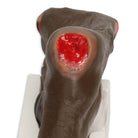
WILMA WOUND FOOT™ (Stand included)
Description
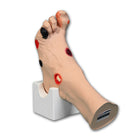
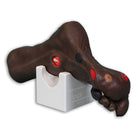
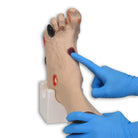
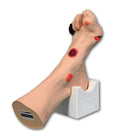
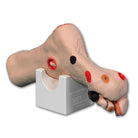
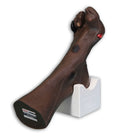
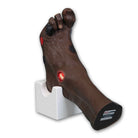
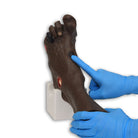
VATA’s anatomical healthcare model, 0950 Wilma™ Wound Foot is molded from an 80-year old patient for a realistic appearance. Twenty different conditions are presented on this VATA model so you can see and understand how they differ. Great care has been taken to hand paint each wound just as they would be seen on a patient for the most life-like patient wound simulation. Once the different etiologies are understood, they can be discussed and a treatment plan devised that will deliver optimized patient care.
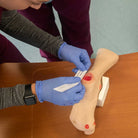
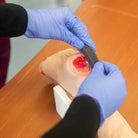
Wound assessment has become critical as inaccurate wound assessment can misdirect the plan of care, affect reimbursement, cause inaccurate reporting of patient outcomes and the appearance of potential adverse events. This VATA Inc. healthcare simulation model is an effective tool for educating healthcare professionals and patients in would identification, staging of wounds, and their probable etiologies. Wilma™ Wound Foot is also an excellent visual aid for educating those who cannot read well enough to understand basic health care information, allowing them to see what can occur without proper wound care. Routine cleansing and dressing changes can be taught and practiced on all the wounds by healthcare providers, patients, families, and caregivers.
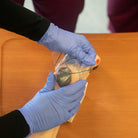
This VATA model is made of flexible material permitting the toes to be moved for closer examination or the application of dressings. This unique material permits the application and removal of dressings without leaving adhesive residue, when used according to supplied instructions. Each VATA model is supplied with a positioning base for the foot which will give hands-free access to all the sites when applying dressings or for teaching.
The following conditions are presented on Wilma™ Wound Foot:
- Stage 1 pressure injury on the medial malleolus
- Stage 2 pressure injury on the lateral foot (behind the 5th toe)
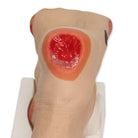
- Stage 3 pressure injury on the heel with infection
- Stage 4 pressure injury on the lateral malleolus with exposed tendon and bone (with
- osteomyelitis)
- Stage 4 pressure injury on the medial foot (behind the great toe) with exposed tendon and
- slough
- DTPI (Deep Tissue Pressure Injury) on top of foot with “mushy/boggy” feel when palpated
- Unstageable eschar on lateral foot
- Full thickness ulcer, plantar, 1st digit, probable diabetic neuropathic etiology
- Callus under the 4th metatarsal phalangeal joint
- Amputated 2nd toe
- Dry gangrene of the 5th toe, due to ischemia
- Interdigital maceration between the 4th and 5th toe
- Partial thickness wounds between 3rd and 4th toe at 1st joint
- Corn on top of 3rd toe
- Callus at tip of 3rd toe
- Ingrown toenail on the medial aspect of the great toe
- Fungal thickened toenail on the great toe
- Blister on great toe at the first joint
- Hammer toes – 3rd, 4th and 5th toes
- Skin stapled wound
VATA Inc.’s Wilma Wound Foot is a great tool for training, competency testing, skills assessment and dressing techniques!
Display stand is included with the model.
Optional carry case available 0951.